

The bottom of my jet-ski is an awesome shade of purple. [sarcasm] It needs a bunch of repair anyway, (along with wanting to cut and mud in a bigger pump) and I'd like to change the color.
Should I sand everything down to the glass then re-spray it? Or just rough up, repair and spray it. I was thinking that every time there's a scratch that sweet shade of purple would shine through if I do it this way though.
If this goes well I might try a pair of boat hulls.

If you're not worried about weight(the jetski) just scuff and re-gelcoat ,or better yet good marine paint. For your boat hulls I'd try to remove as much or more than you add back, if it's a race boat. And do yourself a favor and use that Duratec (sic?) stuff if you gelcoat.

If the weight of the old gel isn't an issue, I'd just fair it and put some tooth in the existing gel. Spray, wet sand, buff, done. Use Duratec clear additive.
(edit: Obviously Cat Fever has no idea what he's talking about. You beat me by 20 seconds. <img src="<>/grin.gif" alt="grin" title="grin" height="15" width="15" />)
Tooth? Is that a typo Jeremy?

Nope - he means give the new gelcoat something to bite, i.e., rough up the surface before application... sometimes the interface where the old gel has been taken off and the competent existing gel can have a
toothed
or zig-zag appearance, too. This gives a better surface that yields less apparent repairs. Think of the black zig-zag on Charlie Brown's yellow shirt...

You are trying for a
mechanical
bond. If you shoot multiple layers of gel coat, you want to do it before the first layer flashes off so that a chemical bond is achieved for the those layers.

mechanical
bond. If you shoot multiple layers of gel coat, you want to do it before the first layer flashes off so that a chemical bond is achieved for the those layers.
And since the gelcoat that is already there is chemically cured, there's nothing left for the new gelcoat to bond with on the molecular level. So, you give it tooth...rough sand it. This gives the new gelcoat something to mechanically bind to.

How rough, 80 grit?
Personally, I start lower to get the high spots out but finish up with 220 grit before gelcoat.

I went to 320 and I'm having some adhesion problems.
I started at 60 and gel prepped at 150 with good success. Gel coat is so thick and if you get a nice flow, the final will been very rewarding especially when you get to the rough cut compounding phase.
Thickness
. I don't have enough which is part of the adhesion problem but too much will lead to crazing.

mechanical
bond. If you shoot multiple layers of gel coat, you want to do it before the first layer flashes off so that a chemical bond is achieved for the those layers.
This is true if your using Duratec. Treat it like paint. However, If your shooting gel coat without wax or Duratec you can let each coat kick before the next coat and still have a chemical bond. Gel coat without the additives stays sticky after curing. Then mix the Duratec or wax in the last coat.
I've quit using Duratec. The cost isn't worth the slightly less orange peel ( still have to sand and polish )
Block sand with 80 to start. Fill any bad spots. Sand those areas till smooth. One more time with 180 all over. Spray two to three coats w/out additives. One last coat with additives. Then I would block with 180 until the peel is almost gone then wet sand 220, 400, 600, 800 and buff. Hopefully you don't go through.
It's the bottom of a ski so I wouldn't put too much into it.
When your spraying make sure your careful when feathering and don't stop in the same place as you put coats on. You can wind up with a few very high spots.
Is there a difference in gel coat brands? What's a good source?
mechanical
bond. If you shoot multiple layers of gel coat, you want to do it before the first layer flashes off so that a chemical bond is achieved for the those layers.
This is true if your using Duratec. Treat it like paint. However, If your shooting gel coat without wax or Duratec you can let each coat kick before the next coat and still have a chemical bond. Gel coat without the additives stays sticky after curing.
Yeah, man. Hotcoat! Spray a good heavy coat of gel, don't make it sag though. Walk away for a bit to let it go off a little, and toss the gun in a cool place... we use a small fridge... then come back and spray a little more. Repeat several times. You've got to watch the thickness though to avoid runs.
I know a guy that walks away from the first coat and takes the opportunity to leisurely grind up his weed. Then he goes back to spray. The second break he rolls a spliff, and goes back to spray a little more. The third break he smokes it, and goes in for his final application. Says it helps him avoid the peel, which lessens his finish time.
I usually take old gel down to 120 before spraying. Fix any and all pinholes ahead of time to avoid pin air. Don't use any epoxy fillers. Marinetex should be banished from the cat sailor's lexicon...hate that shite. It's ruined more gel repairs than any other substance known to man. Formula 27 works well.
you make it look so easy. Must be the spliff!
Thanks for that cool vid
Thanks for that cool vid
I learned form the best in both realms. <img src="<>/grin.gif" alt="grin" title="grin" height="15" width="15" />
I tried to make that vid using what a typical garage repair guy could get, or would have laying around. I shot it in my driveway, after work, the sun was going down, it was too cold, my wife kept knocking on the window to tell me it was dinnertime, you know, the typical hardships of repairing boats in an uncontrolled environment.

Old glass man here,
Never need anything but resin vapors to spin my ceiling. It's needed after grinding out the soft stuff for a repair and itching for a week.
The word
tooth
was used earlier. In the coating world it would be referred to as
profile
. Yes 150 grit would be best to start with for either spraying or putting on thickened with a squeegee.
I think that's my 2 cents after sniffing resin for a few years.
What would you thicken with to squeegee?
What ever is in my bag of tricks but mostly thicksil (a fine powder)

thanks for sharing surf city
what size spray gun tip have YOU found best for gelcoat
it seems people use pretty much everything from 1.4mm up to 2.3mm
as in this google find
* Gelcoat is quite viscous and almost impossible to spray without thinning it. The less you can thin it the better the gelcoat will be, so the use of a larger spray tip is required. I use both 2mm & 2.2 mm HVLP gravity feed cup guns for most of my heavy shoots. At this size the thinning is kept to a minimum.
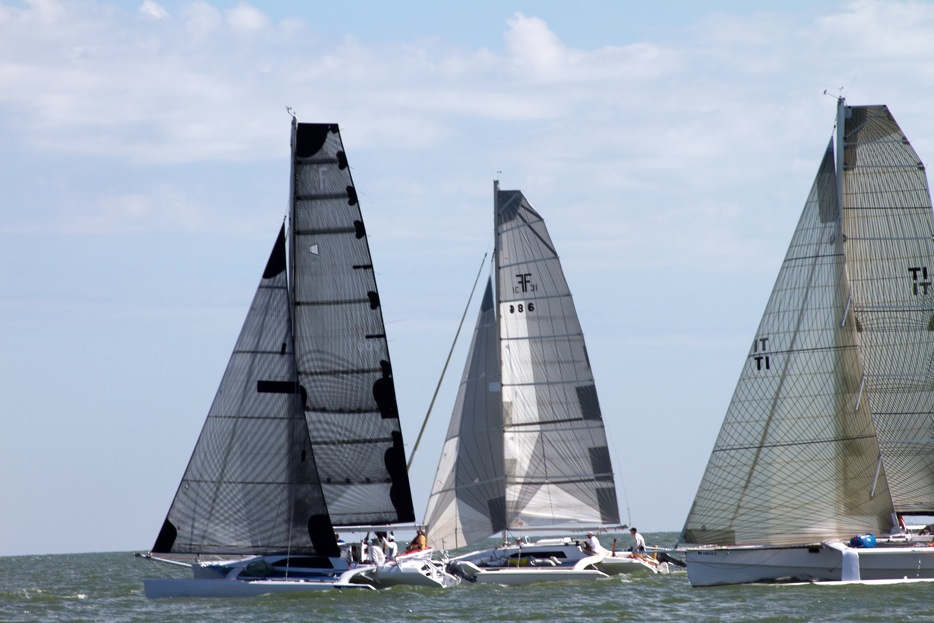
Here's how I would do it on a jet ski:
Get the biggest drill you can find. Get the biggest drill bit you can find. Drill as many holes as possible in bottom of said Jet ski to get rid of gelcoat an fiberglass together. Place in water. Watch it sink.
You could alternately use some C4 or other explosive, but that might get a little messy.
:eyeroll:
It's a standup ski, its fun, it fits in the back of my pickup.
I'll be shitcanning my sailboat long before I ditch my ski.
Get the biggest drill you can find. Get the biggest drill bit you can find. Drill as many holes as possible in bottom of said Jet ski to get rid of gelcoat an fiberglass together. Place in water. Watch it sink.
You could alternately use some C4 or other explosive, but that might get a little messy.
Best advice yet! Or leave it purple...kind of fits Karl's motif. Better yet, he should sell that purple thing back to the woman he bought it from.
E,
Anything from about 1.5 to 3 will work. Depends how thick you want it, and how much patience you have to get it that thick.
1.8 is good for small repairs.

Surf City good advice.
I usually use Gel Coat, acetone, hardener and throw a little wax in and thin the last shoot to help with the cure and sanding of course that is when a pine needle or bug lands in the gel coat!