

Yes I know that I'll need to talk to the GC but before i go to that extend can anyone confirm or explain interpretations of a couple of rules for me.
Question 1:
1.2.4 The hulls, beams and trampoline shall not be permanently fixed to one-another. the Formula 16 Class authority may demand that these items be disassembled, but only at a time when doing so does not directly affect the fairness of racing.
Does this mean I have to be able to separate the tramp from the beams. ie if I wanted to make a solid tramp it could not be made as one piece with one or both of the beams. Or does it just mean I would have to be able to unbolt this structure from the hulls. Does the platform need to break down into 5 distinct components. stbd hull, port hull, front beam, aft beam, tramp?
Question 2:
Are skiff style rudder gantries allowed so long as they don't extend the hydrodynamic surface of the boat? I can't find anything in the rules that makes them illegal. If they are permitted can they be permanently built on as per 12' skiff gantries or outboard engine pods.
Question 3.
Are gybing dagger boards allowed? everything else seems to be restricted except this am I correct?
Question 4.
Is it possible to ask the GC to guarantee grandfathering of all
novel
design features should they ever become outlawed. If I invest in some reasonable quality tooling I don't want to have it made worthless by a rule change 12 months later and as a result I'd want an undertaking from the council that vessels will be able to be built to the rules that were current when the first boat of that design was launched.

Question 1:
1.2.4 The hulls, beams and trampoline shall not be permanently fixed to one-another. the Formula 16 Class authority may demand that these items be disassembled, but only at a time when doing so does not directly affect the fairness of racing.
Does this mean I have to be able to separate the tramp from the beams. ie if I wanted to make a solid tramp it could not be made as one piece with one or both of the beams. Or does it just mean I would have to be able to unbolt this structure from the hulls. Does the platform need to break down into 5 distinct components. stbd hull, port hull, front beam, aft beam, tramp?
As UK measurer, I'd say they need to be seperate bits.
Are skiff style rudder gantries allowed so long as they don't extend the hydrodynamic surface of the boat? I can't find anything in the rules that makes them illegal. If they are permitted can they be permanently built on as per 12' skiff gantries or outboard engine pods.
I believe these to be legal, but it's not been tested. See link below.
Are gybing dagger boards allowed? everything else seems to be restricted except this am I correct?
Ref. here
I don't see anything that bans them:
1.6 Daggerboards and rudders
1.6.1 The platform shall be equipped with a pair of rudders.
1.6.2 In addition to the rudders, the platform may also be equipped with a pair of daggerboards or centerboards.
1.6.3 All performance calculations, such as handicap ratings, shall be performed as if a platform has daggerboards or centerboards, even though a particular design may have neither of them.
1.6.4 (Added by vote, August 2007) For the avoidance of doubt, daggerboards/centerboards will conform to the following :
a) Curved/’Banana’ boards will not be allowed.
b) Assymetrical cross-section profile boards will be allowed.
c) Fore/aft movement of the boards when in the down position will not be allowed.
d) End fences/horizontal appendages below the waterline will not be allowed. The board shall be capable of removal, without tools, via the upper opening of the case.
e) There will be no limitation on the daggerboard/centerboard length
Is it possible to ask the GC to guarantee grandfathering of all
novel
design features should they ever become outlawed. If I invest in some reasonable quality tooling I don't want to have it made worthless by a rule change 12 months later and as a result I'd want an undertaking from the council that vessels will be able to be built to the rules that were current when the first boat of that design was launched.
Please read the rules with care, please read this very carefully, 2.3.2 answers your question about grandfathering.
2.3.2 The Formula 16 class authority however reserves the right to disallow any feature or to change, amend or add new rules to the Formula 16 rules in order to either ensure safety, garantee the class's survival, protect the class's character (spirit), satisfy the class goals or facilitate the growth of the class. This right will only be excerted with great caution and non-urgent changes, amendments or additions will be put on a pre-next-season notice and only become effective the next season.

How far can you go to maximize the uni rig? Is it allowable to do away with the spin and jib and go to a taller A class style?
The F16 rules limit the height of the mast Petey.
I'm assuming the Blade mast is max height?
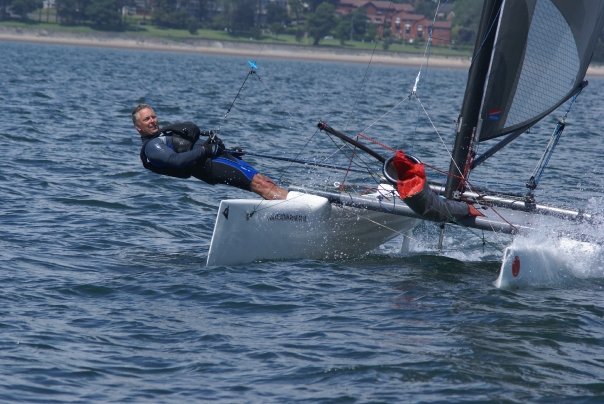
To answer question one, I always believed this rule was to prevent the beams being permanently glued to the hulls (Like most modern A Class) So therefore I can never imagine a F16 without beam bolts.
As for the other questions I would speak to one or all of the technical committee before parting with your hard earned cash, that's Peit Saarberg, John Pierce I think Phill Brander and perhaps Greg Goodall?
Maybe somebody from the Governing Council could confirm.

mast height and main sail are are limited.
One has the option of not taking out the kite but one must remember the boat must still weigh the minimum when out racing.
Scarecrow,
Contact the GC via Hans. PM him here and I am sure he can provide the appropiate email address
Scarecrow,
My advice would be to send an email with those questions plus any other questions that you may have to the Chairman of the Governing Council. (You can get the email address from the F16 web site.) F16 GC contacts
If need be he can call on the resources of the Measurer or the Technican Committee.
That would be the best way of ensuring there is no misunderstanding.
Regards,
Phill
Phill,
That was always my intent, however, I thought some or all of the above may have been discussed in the past so I thought I'd test the waters here first.
Phill, answering these questions here would help any designer contemplating a new design..
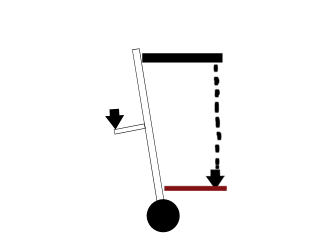
While reading this, I was struck by a couple of rules about dagger/centerboards which seemed confusing. Since the legal experts are presumably on this thread, it seems like a good time to ask...
a) Curved/'Banana' boards will not be allowed.
How is
curved
defined here? Is this a requirement that the leading edge, or trailing edge, or quarter-chord be straight? Or does the rule refer to boards whose planform is curved so that they act somewhat as hydrofoils? (The latter would make more sense, I guess.)
c) Fore/aft movement of the boards when in the down position will not be allowed.
This rule would seem to prohibit centerboards, but I'm sure it is meant to say something else...? Particularly significant for those of us who often sail in shallow water and/or around lots of weeds.

All the F16's I have seen have Dagger Boards, which cannot be moved for and aft, only up and down.
Fore and aft movement would require swing boards like Tornadoes have.
Am I on the right track?
MB, I agree that most newer cats seem to have daggerboards which slide vertically, probably because of their hydrodynamic advantages: less drag due to a slot in the hull; the leading edge remains nearly vertical with the board partly retracted (better lift to drag ratio in that position); and the board's center of lift (or
lateral resistance
if you prefer) doesn't move aft as the board is retracted. Apologies if you knew all this stuff and I'm just repeating it, BTW.
However, pivoting centerboards have advantages in shallow water: they're not as prone to get stuck when scraping the bottom and they're really easy to free of weeds (one can even sail with the boards raked back about 45 degrees so the weeds mostly just slide off). And that's why I was asking about the fore-aft rule: it might be nice to design something legal but helpful to the mud sailing crowd.
It would be nice to know the motivation and spirit behind the centerboard rules. What sort of abuses does the rule exist to prevent?

The original (and continuing) intention of 1.6.4c is to prohibit the design of a centreboard/daggerboard arrangement tht allows the sailor to optimally trim the boat for sloop/uni configurations by moving the centre of lateral resistance. To an extent, CBs permit this already as you can swing the board up slightly but this has the additional effect of reducing the area.
The key phrase in the rule is
when in the down position
Aha, thanks. That does add an interesting dimension to the design space!