
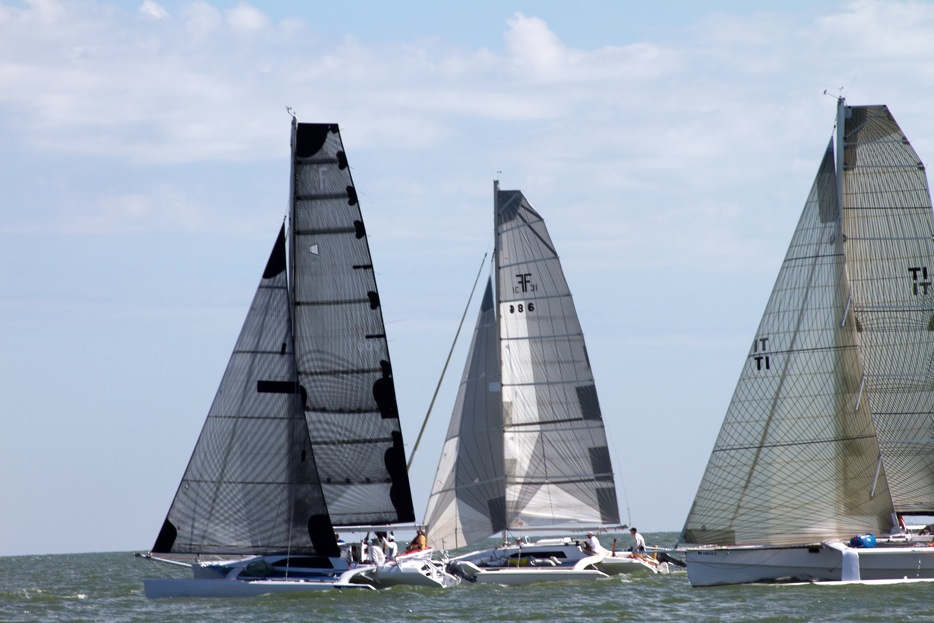
Anybody have any issue with this from experience? Any suggestions of what to look out for or plans to be made?

I hope you're NOT starting another thread on wives and girlfriends? <img src=

alt=
/> <img src=

alt=
/> <img src=

alt=
/> <img src=
alt=
/>

I did this for the last 4 years for big boats works well so long as you can get the ppl to sail it (60ftr)

You need to be aware of what each other wants from the boat. Also its likely what you will want from the parnership will change once you use the boat.
Have a severence agreement and dont buy a boat that is hard to sell. Have a very clear ongoing budget plan and choose your partner carefully. Dont overspend, it will only mean money will become a thorn. Depending on the value as to what you are prepared to lose, you might want to consider and agreement on paper with a certified witness or Legal practitioner. Speak to an insurance broker as they as they must deal with this a fair bit and could offer good advice.

Put everything on paper! Consider every
what-if
scenario you can think of and make sure both parties are happy with the details. A little painful work here can save a lot of headache, heartache, and friendship.

Spend most of your effort on dealing with how the arrangement will end. Specify a buyout plan in agreement. I bought my first boat half-and-half with girlfriend. Agreement specified that if either partner wanted out the other partner had first option to buy the half and the price and payment schedule which would be used. (payment schedule was slow enough to not cause financial distress to either of us at the time). The plan also included that if a partner wanted out the other partner could specify that the boat would be sold at that time (rather than them getting a new partner) and the method of advertising, setting price, and dropping price until a sale occurred. It really paid off in the
end
.

Invariably, there will always be someone in the partnership that will use the boat more than the others. In the beginning there is the
honeymoon
were everyone is excited about the prospect, then as time wears on the child bearing phase sets in (repairs, etc) and the money mounts up. You then look at the cost/hour (day) sailed and one of the partners thinks maybe this is not a good idea especially since you are always the one available to sail and not he/she. Then comes the divorce... what can I say, $%^& happens.
From some research I've done in the past, it rarely works unless you really cross your
T
s and dot your
I
s. Try to envision every conceivable scenario. Be the devils advocate, better now than later.
Good luck,
Clayton
P.S. Figure your time and compare it with chartering. Then you go anywhere and anytime you want and someone else takes care of the maintenance.
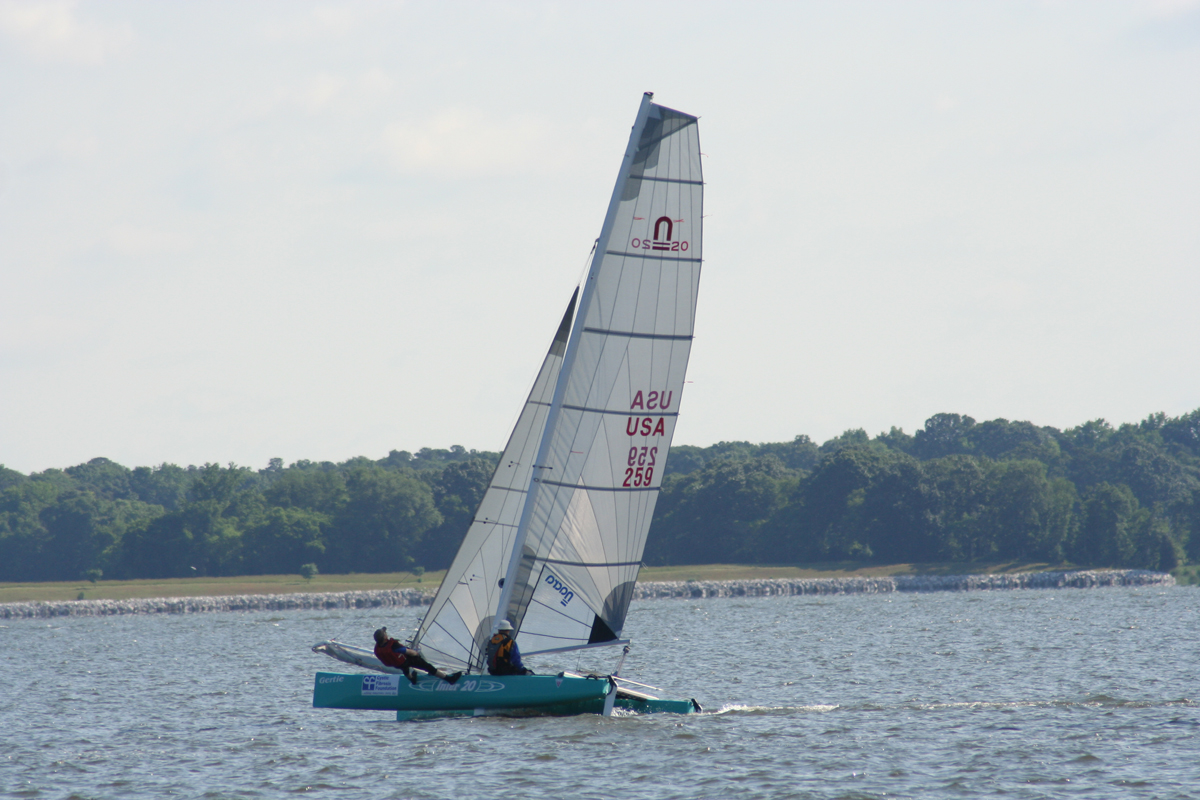
Clearly define an exit strategy and tactics. The below ideas and questions are based on personal experience. I’ll say it right here and now, I was the problem. I didn’t understand myself well enough to do many of these things and I wish that I had. If your like me, in that you like to get input from others and then make a decision on your own, co-ownership may cause more strain than its worth. When you come to this realization, then the exit strategy and tactics will be there for both of you. I always tried to encourage my co-owner that we needed a written agreement to protect him from me. That turned out to be the case.
Clearly define an exit strategy and tactics.
Take the pain early, do the “Partnership” work upfront. Here is a, I think, great book reference on co-ownership:
Yachtsman’s Legal Guide To Co-ownership
, by Dexter and Paula Odin, published by deGraff in 1981.
Clearly define an exit strategy and tactics
Some questions for you to ask yourself and your prospective co-owner:
Will you be racing the boat?
Will you be racing together?
What are your goals and do they really match up with the prospective co-owner?
How will you handle the inevitable changes in personal goals?
Who is going to drive and who is going to crew?
Will these duties be shared?
If so, how often and under what conditions?
Who will have the finally say in on-the-water-decisions (Just because you have the tiller in your hand doesn't make you the skipper, at least not on “my” boat)?
Are spouses involved (I felt like I had three wives and one is more than enough!)?
What will the rules be for the spousal conduct?
What will your upgrading budget be?
How often will you replace sails?
How will you handle being asked to not race in a race so that a different person can crew?
Clearly define an exit strategy and tactics.
If you are going to be using the boat separately, many potential problems go away, save scheduling and upgrading and maintenance decisions.
Your goals need to clearly match and be agreed to in advance of transactions. As in:
We will race once a week together in preparation for competing and being competitive in large events, Nationals, Tybee, Statue Race.... (Money and time have no bounds)
Or,
We will race only locally for the sake of bar stories and braggin’ rights!
BTW, It is very nice to have half of the bills paid for!
A couple of beers might get you the stories behind how each of the above questions is very important and how I should have asked them of myself. Clearly define an exit strategy and tactics. All the above can lead to great fun and can lead to frustration and strain on you life. Its up to you!
Oh yeah….. Clearly define an exit strategy and tactics.
Good advice above!
I partnered up with a distant friend to buy our Marstrøm Tornado, and we are still friends. It has worked out very well for us, but we have needed to work on it underways.
I would not hesitate to partner up with somebody I knew relatively well to buy a boat for a campaign or racing. But for a recreational boat to be used with your respective families, I would demand a clear agreement on all financial matters and boat work. Like what is said above.
After having co-owned our current boat for the last four years with Frode (look at the
first mate
thread, and you get the idea), while hearing and seeing how other boats handle boatwork+financial stuff, I find it very advantageous to co-own the boat. I have a regular crew, motivated to both work on our sailing and the boat. If we want to buy something expensive for the boat, we can split the cost. Since we know each other very well after a while, I have a great friend etc. Driving 15-20 hours to a regatta is much more fun with a good friend. So there are lots of advantages to co-owning a boat with the right person. Co-owning with the wrong person on the other hand, or when the project goes sour.. Ouch!
all good advice. I was approched several times for people to partner on my ex-boat (viva 27)i never did it. I was so afraid of different sailing styles. the parteners un availablity to acully work on the boat. they could write checks but not acully work on it. in my humble opinion boats are like girlfriends. and i'm not cool with sharing.

For an event or racing, yes. For a recreation playtoy, no. People change, problems arise. Proper documentation with exit strategy is crucial, avoid arbitration clauses. Define and value everything in the contract.

People and needs/desires/whims may undergo rapid change despite good intentions. Several kinds of professional people are quick to abandon joint investments like this, and want ALL of their money back RIGHT NOW!
For example, I know several MDs who...... Ahhhh- the advantage of being old & experienced....

I guess you need to look at the racing schedules and find races you can win so the price of the boat goes up when y'all implode!
<img src=

alt=
/>
<img src=
alt=
/>
Winning races, that would be something new! With all the rock stars where I race, the only race I could win would be the one with only one boat racing.. ME!
I have specifically left out the type of boat to avoid being lectured <img src=
alt=
/>

alt=
/>
ORLY! ahhahahahah <img src=
alt=
/> I heard a little birdy say the type of boat you are talking about! muahahahahah HOPE YOU HAVE PAYPAL! <img src=
alt=
/>

Thanks for the thread. I will be
in discussion
after the first of the year on a 3 way partnership for a larger monohull after selling the cat. One thing that is a must is a stupidty clause. If you do something stupid and break the boat, you pay, not the partners. As stated everything must be in writing, especially the termination clauses.
I like this stupidity clause you mentioned. I guess it means the stupid action that broke the boat requires the one who did it to pay the insurance deducible.
yeah - more like a
you broke it, you bought it
clause. i.e. capsize, land in the boom and bend it...You can't expect your boat-owner partner to pony up for half of a replacement boom can you?
How often do you guys expect to replace sails?
Negativity disclaimer: I feel very strongly about this topic. PM me if you want to actually talk about it and I’ll give you my number. I think it is a great way to make sailing accessible. It’s a great way to get new people sailing on a regular basis. Unfortunately, the negative side of it really needs to be explored very carefully for it to be sustained. Know thy self is the utmost importance. I have turned down two offers to co-own bigger boats. It is not been because of them, the prospective co-owners, it is because of me. I just can’t put another friend in that situation.
hmmmm.... better think that stupidity clause thru a little more. All parts have some, lets say, wear on them or fatigue associated with them the moment they are put into use. Better outline or define the things you think are stupid, as in stupid decisions. The more specific you be upfront, the better off the co-ownership will be.
Perhaps you will all agree that easing the mainsheet with the spiny deployed is a stupid decisions. If so, write it down. If you agree on this, then its time to put a system in place that will keep the mainsheet from coming out of the cleat during a gybe as one of your partner’s knees is trapping the sheet on the tramp causing it to come out of the cleat.
Another you might consider writing down, losing a protest that caused damage to your boat and someone else boat or many other boats. What if all the partners were on the boat when the damage occurred? Lets say the nut at the wheel or tiller went against the advice of the crew partners, then what?
If it really was stupid why would your part of the insurance policy cover it if you have a joint policy on the boat? Now you both have claim history to deal with.
How about the boat use scheduling effect while the boat is being repaired? Boat wrecked or badly damage because partner didn’t take his pitch-pole like a man on a Tuesday evening. And you are scheduled to use the boat the following weekend in a 100 mile distance race and you’ve paid the registration fee, have ground crew lined up, hotel room reserved and you have crew flying in to do the race. Who pays for that? Write it down.
This is a good idea to explore this with your prospective partners. I think it will tell you a lot about them, it will tell you a lot about yourself (which is probably the most important part), and it will tell them about you.
We might have some fun with it by coming up with a better name than stupidity clause. Might tip off the insurance adjuster with that clause name.
Any suggestions from the gallery?
Jake,
What if your capsize happened because the trap let go? Sounds like a maintenance issue to me. All pay.
Sorry to
what if
this situation, but
What if
was created for this very reason, I think.
Patrick, an initial list is being created for you on this forum.
If the trap let go, you're not going to fall into the boom are you?
Ok...so the one remaining person on the boat might...but still. I think it would be fair to assume that in the case of a failure like that that would lead to an additional breakage, the person sailing the boat should take the responsibility for accepting the condition of things like trap lines. If it breaks and results in some other breakage, he/she is responsible for accepting the condition of the trap wire before pushing off the shore for that sail.
I can see how this could all go terribly wrong and that the complications will grow exponentially with the value and/or complication of the boat. However, it can be done with some simple rules put in place.
The worst situation I would think to have to deal with is when the partner agrees he needs to replace something (say the boom) but doesn't take care of it in a timely manner.
No, but the crew might. Might get stuck in the mudd, maybe snap the mast, break battens . . .
I have no problem with that, it is a fine conclusion. As long as
we
agreed to that approach in the past, wrote it down, and adjusted the maintenance philosophy and allowed flexibility in the budget.
Cool! Animosity, distrust, blah, blah ...all avoided.

Damn, man, you got me so scared I'm going to write up a contract between me and myself!
Ok, skipper and crew are partners, skipper asks crew to do something that crew thinks is stupid, but does it anyway. But screws up doing it. Who pays? The one that was the stupidist?
Ok, now, take the above situation. The mast breaks, and while looking up at the breaking mast the skipper changes course. The boat flips, but does so in front a ferry boat carrying a load of nuns on a site-seeing tour. The ferry boat turns hard to port, crushes a jetski trying to jump its wake and continues on into the fully loaded LNG tanker tied up at the transfer dock. The resulting explosion levels many city blocks. As the fire burns so hot, there is no evidence as to what happened. Blaming it on terrorism, the US invades Latvia as a result. But it turns out that Latvia does have nukes, and the world ends up glowing.
My question is this - does the skipper or crew have to pay for the jetski? And am I entitled to compensation for being stuck in the related traffic jam?
Honestly though, I think the stupidity thing should be called:
The Chris Clause! A bit of a holiday sound to it...
Sorry, back to your regularly scheduled thread...
Ok, skipper and crew are partners, skipper asks crew to do something that crew thinks is stupid, but does it anyway. But screws up doing it. Who pays? The one that was the stupidist?
Ok, now, take the above situation. The mast breaks, and while looking up at the breaking mast the skipper changes course. The boat flips, but does so in front a ferry boat carrying a load of nuns on a site-seeing tour. The ferry boat turns hard to port, crushes a jetski trying to jump its wake and continues on into the fully loaded LNG tanker tied up at the transfer dock. The resulting explosion levels many city blocks. As the fire burns so hot, there is no evidence as to what happened. Blaming it on terrorism, the US invades Latvia as a result. But it turns out that Latvia does have nukes, and the world ends up glowing.
My question is this - does the skipper or crew have to pay for the jetski? And am I entitled to compensation for being stuck in the related traffic jam?
Honestly though, I think the stupidity thing should be called:
The Chris Clause! A bit of a holiday sound to it...
Sorry, back to your regularly scheduled thread...
Thanks, I needed a good laugh!!!!!!!
Pay for the damage if you do something stupid?
If this was something I would be worried about with the prospective co-owner, I would not buy a boat with him. Simple as that, and back to the screening process or drooling over the magazines.
Adding such a clause in the agreement would start the ownership on poor ground, with little trust between the owners. Besides, who should decide where the border between stupidity and bad luck/act of god goes? Not a good idea in my opinion. Much better to be picky about who will co-own the boat with.
I would (probably) never buy a monohull for cruising as a partnership. Too many possibilities for such a project to go sour.
OK, On the maintenance issue a fund would be set up to pay for all maintneance items with enough left over for new sails at a specified period, (written down). If the money isn't used or the fund becomes excessive the partners can vote to not fund it for one year. As far as racing, the boat would be raced with the three of us onboard and would not be raced by only one partner. As for the stupidity clause, the other guy suggested it for really dumb stuff like when pulling the boat out & not watching overhead, mast fried. (We know of a co-ownership where this happened). Like I said, pizza & beer to talk on what the partnership would look like. Better to know the others & thyself, and I do trust the other two guys but need to verify everyones thinking on the topic and as you have all stated: Get it all in writing.
It only took four of my post, perhaps the last few pushing the ideas a little far, to get you involved.
Nice! That is a good start.
I am restraining myself with the above.
Hey, want you book back? Be at the club tomorrow between 9-12, I might even have it with me.
We can't seem to figure out the best way to deal with financial/use responsibilities during a buy out period but we came up with 3 possible options:
Severance Agreement:
l. If either partner is unhappy with the agreement for whatever reason they may opt to sever the contract.
ii. Ownership rights are surrendered when the difference is entirely paid unless the seller wants to relinquish his rights. In the case werein the seller wants to relinquish rights the buyer assumes all financial responsibility and will pay the seller within the agreed upon year. [color:
red
] I can think of three options:
1. Pro-buyer: total buy in(financial and decision making) until paid off.
2. The walk away: No financial/decision making responsibility and pay off starts(owner financing scenario)
3. Pro-seller: prorated financial with decision making retained or limited somehow(I can’t imagine a prorated vote when there are only 2 members). [color:
red
] I don’t have a problem with limited decision making but there would still be rights to use the boat until it is paid in full.
Anyone have any ideas/experience/suggestions?
Go to the Texas City Dike website www.texascitydike.com
Ask if they can find Kevin Grice's contact info for you. Kevin has been in a 3-partner F28R ownership gig for at least 3 years as I recall.
All three guys are active sailors. I think at least two of the three also have their own beachcats (well one of them has a Tornado for sure). They seem to have worked it out...