


This is a very interesting project. I noticed the builder avoided exotic materials and is investigating core materials from other than the marine market. Very Sensible. I wonder if they will use wet layup or vacuum bags to build the hull? The laminate schedule for the hull seems very light to me - basically an inside and outside layer of 540 GSM fiberglass. Would like to know how this stands up in service.
For comparison, the laminate schedule for my 34 foot amas was: 200 GSM e-glass cloth, 340 GSM carbon cloth, 200GSM Kevlar, 1/2 inch nomex honeycomb core, 720 GSM carbon unidirectional, 340 GSM carbon cloth. This is from the outside in. This was a judgement call on my part just as the skin for this smaller tri is a judgement call. That's why it's so interesting to find out what works and what dosent later in the boat's life.
Kevin
Kevin,
I found extremely interesting the fact that less dense construction foam withstands more compression than higher density
marine
foam.

the issue with construction foams may be ingress of water is higher than
marine
foams.. Just as a guess..
that's something worth testing - leaving foam test blocks immersed and then weigh them...can that be considered an accurate test ?
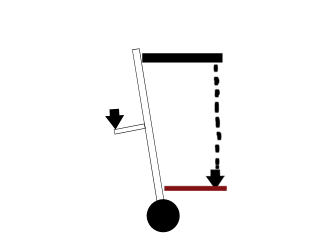
About leaving foam samples in water and then weighing them: I think that's a useful test. However, for the results to be meaningful, the blocks would need to be immersed fairly deep in the water rather than just under the surface (perhaps at the keel depth) to match the pressure which would be trying to force water into the foam. The timespan of the test would have to be fairly long also, as the problem of water soaking into the foam probably happens fairly slowly (except for beaded type polystyrene, which soaks up water like a sponge; fortunately, this type is not being considered in this thread).
About strength testing: When used in a sandwich hull, it's not just compressive strength of the foam that matters but also shear strength. I've been messing with some glass and carbon sandwich samples, just to get a feel for how this stuff breaks...and using extruded polystyrene foam (cheap blue stuff), I found that the foam failed very early in shear, usually near the bond with the skin, during 3-point bending tests. PVC foam worked a LOT better. Interestingly, redwood with carbon cloth was considerably stronger (though heavier) than high density PVC foam with the same 2 layers of carbon cloth on each side.
Scarecrow where are you?
think I will leave Scarecrow to answer in depth.. He should be up with latest foams..
ingress, shear, compression and aging..

Its much more fun this way <img src=

alt=
/>
There is always a risk of over simplifying answers like this or ending up so complicated that you loose everybody. But here we go.
Everything discussed so far with foams is relevant along with a few other items.
When specifying cores the first port of call is usually Shear strength. As mentioned above the shear strength of the core will usually determine when a sandwich panel will break. As shear strength is basically proportional to density we have to find the minimum acceptable shear strength to be able to build the lightest possible product.
Depending on the use of the vessel the next consideration is usually strain to failure. This is how far you can distort the core without if breaking. A high value here will make the laminate more
robust
. The best foams for this use are either SAN (core-cell) or linear PVC
Compressive strength. The advantages of a core with high compressive strength are pretty self evident and a lack of core compressive strength usually materialises on our off the beach cats as dimples.
Temperature form-ability. Anyone who has built their own boat can tell you about the difficulties of forming the foam core to shape. The easiest solution to this is to score one or both sides of the foam so that it will bend to shape. The disadvantage of this system is that these grooves eventually get filled with resin or bog loosing much of the weight saving gained by using a core in the first place (This is particularly the case when infusing). Selecting a core that can be heat formed will allow you to build a lighter boat, however, if you do this paint it white because otherwise it may change shape on a hot day.
You can use blue builder's polystyrene as a core but make sure you have a full understanding of its structural properties. We've used it in 10m ply catamarans to create ply/foam/ply bulkheads and sole and cabin top panels but make sure you have a full understanding of its strengths and weaknesses.
For most off the beach projects 80kg/m PVC is a good start. Beyond that you'll need to engage someone to do the calcs for you.
I think the above threaded the line between oversimplification and pedantry quite skillfully.
How does balsa core fit in? It seems to have higher properties (and density) than most PVC, and you sure can't heat form it, and it certainly stinks when it gets wet...but it's cheaper (here) and it has that
renewable
feature if logged from properly managed forests.
Balsa is one of my favourite cores. Its particularly good for decks where its superior compressive strength allows you to bolt straight through it (make sure you drill the bolt holes oversize and seal). It also has good shear strength. We often spec balsa for decks (as mentioned above) and also for bulkheads and other flat parts.
So we keep coming back to good old wood for a high performance core <img src=

alt=
/>
I agree with Slosail’s advice. But to understand why shear strength is the most important property you need to look at the structural theory of sandwich panels. For many boats and aircraft the most important failure mode is elastic instability – buckling or “oil canning”. A skin of very thin carbon can handle the in plane stresses and strains but the structural stability is dependant on panel stiffness. The core material plays the same role as the web of a steel I-beam to separate and rigidly attach two load bearing faces. So, this depends primarily on the shear strength of the core and the strength of its attachment to the face laminates. But boats are also subjected to all kinds of off-design loading including elbows and knees impacting with lots of force (I have personal experience here!). So, cores also have to be damage tolerant in the sailing environment.
By far the most efficient core from a structural is honeycomb but this is very expensive. Balsa is heavy but very damage tolerant – it will rot if given a chance. I use balsa in high load areas and structural reinforcements. There is another type of foam not mentioned under the trade name “Rohacell”. This foam has higher properties than the boatbuilding foams and can be processed in an autoclave at 130 Deg. C and 30 PSI. Unfortunately is expensive but not quite a much as honeycomb.
Early specifications for aircraft sandwich panels called for dropping a 1 inch steel ball bearing from a height of 40 feet onto test panels and then examining for any local delamination of the face/core bond. Perhaps not a bad approach for boat decks?
So what do you guys think about the core Kjell is using ? Some construction foam 70kg/cum, which showed that can handle compression better than Corecell I believe. If the foam can't handle shear stress as good as
marine
foams, then he might get local delamination during the boat's life.
I assume shear stress in the laminate can be reduced with scoring the foam ? Indeed that will add some resin weight but will it improve shear stress handling ?
Florin,
I suspect it is a good foam to use because foams (like metal alloys) have a correlation between compressive strength and shear strength. Ususlly a high compressive strength means a high shear strength and vice versa. To hedge my bets, I would make up test panels .5m x 50mm of both divinycell and
construction foam
and bend them until the break. Look at how each failed and what load they failed at. This would be enough for me to give it a try but others may have more stringent standards.
Kevin is correct, build a test panel with your preposed laminate and then bend it till it breaks. If the failure mode is fibre breakage then you're probably ok. If it fails by core breakage or skin delamination off the core, look for a new core.
When doing this sort of home build/design project. There is a lot to be said for paying someone to specifiy your laminates. In my experiance 9/10 home built boats are over built. While this doesn't sound like a problem it does mean you've wasted a lot of money on materials that you didn't actually need. The other 1/10 are underbuilt and we all no the issues with that. Some basic composite engineering will cost you less than the money you save in excess or poorly specified materials and will allow you more confidence to head out to sea.
I know a lot of you avoid sailing anarchy, however there is a really good letter from Bruce Niederer on the front page today with some useful and interesting links.
OK, you experienced boat guys who know your stuff...time for another n00b question.
I have no problem with doing the composite calculations to build a panel with the appropriate strength, but I'm suffering from a lack of experience with nautical load estimation. The
regular
loads from weight, wind, crew, etc. are easy to calculate...but what about tricky (and important) things like wave transient loads and the impact of a mast experiencing a pitchpole?
It would seem that a lot of design is done by duplicating the strengths of those who have sailed before and not broken, but are there respected sources of data usable with some math[s]?
Not a good answer but...
One method, not very scientific, is to use the breaking loads of the proposed rigging...prefer the rigging to break before the hull.
That brings up the issue of rigging selection though, which is where experience comes into it.
There are rules of thumb for design loads that have the vessel mass and righting moments as the primary inputs. I have no links for these.
I model loads on things like beach cats by starting with a simple 3D finite element model. Typically if you design these boats to take into account global loads and build methodology you end up with more than enough panel strength for local loads. Having said that I normally then
double check
by calculating the allowable loads for those panels and making sure they are more than I would
expect to see
. For off the beach sailing boats I use 2G accelerations.
Thanks guys, that helps to clear up the fog a bit. Getting close to the point of being able to put together a model, then do the sanity check of running the numbers and seeing if the dimensions and layups come out close to what's commonly used in practice. Then make a few bits and break them, of course. <img src=

alt=
/>
Looking, while writing this, at a picture of Hilfiger's X40 doing a stuff/pirouette at the iShares Cup...the thing appears to have landed without damage; somebody certainly seems to have done the math[s] right!
Or over engineered <img src=

alt=
/>
Or overbuilt <img src=
alt=
/>
Slosail,
Hope you proceed with your design and don't worry too much about certainty of loading. I have spent a whole career managing submarine design for the US Navy. Our submarines are arguably the most over analized, over calculated, and overdesigned vessels in the ocean and still .... we use rules of thumb for everything from wave slap to corrosion allowances. Not as scientific as you might think. All the big yacht design firms do the same thing.
To design my trimaran, I looked at structural loads at the maximum righting moment and applied what I considered reasonable factors of safety for the rig and the boat structure. Although not too often, parts I have designed break when sailing because they may not have been quite strong enough. If nothing you design ever breaks, you are too conservative and will pay the penalty in poor boat performance. Of course dosen't apply to the structural integrity of the entire vessel - that must be reliable.
Kevin
Thanks for the note. I've been in mechanical engineering for many years, and the interplay between calculations, rules of thumb, and experience isn't something new. However, because of safety concerns and the, um, rich cultural heritage of sailing, it seems that boat design involves a few less calculations and a bit more working from experience than, say, land vehicle design. Not that this isn't appropriate...If someone's going to sail with, say, family members then better to add a few pounds than have the thing go all Groupama offshore.
Then there's the experience of doing a bunch of calculations, saying to oneself
I could easily build that at half the weight
, then finding out that there's a really good reason for the extra weight. (
Oh, people don't want the keel to buckle the first time they hit a sandbar...
)
Anyway, I'll certainly proceed with a design...might even work up the nerve to build it. <img src=

alt=
/>

Sorry I'm late here. There is one thing that worries me a little bit with the expanded polystyrene building foam. Check how well the glas or carbon is adhering to it, I had some bad experienses of delamination with this kind of foam.
expanding foam is a definate no-no. Lacks shear strength (I've tested it) and soaks up water.
There are updates on Kjell's website, he finished applying the foam.
http:/
Have two Blade F16 hulls that I don't know what to do with, would it be possible to do the same?
*gaaaahhh* Certainly you can hear my screams all the way to Finland?? <img src=
alt=
/>