

Please explain....
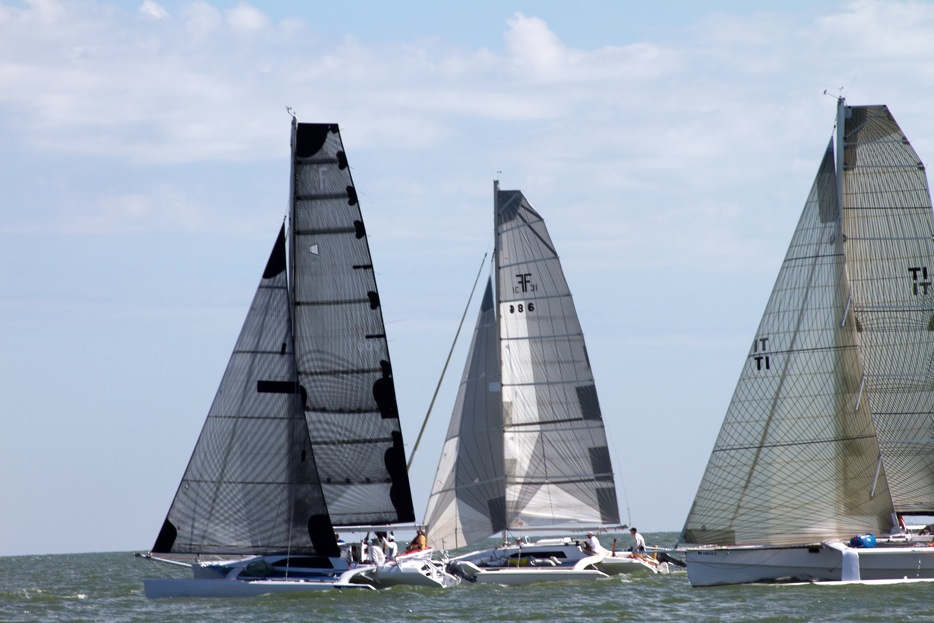
just seems like things get more complicated I guess. puts up more barriers to getting into racing. people much smarter and more experienced than me on this forum get into disagreements over interpretations of the rules all the time. just another reason why someone off the beach wouldn't want to get involved.

This is my observation after being out of sailing for nearly 25 years...there are precious few beginners getting into racing.
We have discussed this dynamic before without any resolution, and I doubt if the trend can be reversed.
In the
old days
racing was a reasonable transition from recreational sailing. For the most part, beginners could participate without being intimidated by the rules and super competitive attitudes of the “old hands”.
Certainly you might get a stern word from a curmudgeon that you offended, but more often than not it was the beginning of a friendship.
Race committees were volunteers, some were good and some were bad. Courses were not always perfect. Racing was as much about sailing the course you were given well as was besting your rivals. The skills to do that required more seamanship, I think, than the cookie-cutter courses we now have.
I used to love the challenge of racing amognst the islands at Miami Yacht Club. Many folks hated it though! I wouldn't want every race to be that way, but some variety makes things interesting.
Now we have professional race committees and protests against them if the course isn’t perfect. We have top sailors who complain unless every race is a W/L, perfectly square to the wind. Races are abandoned when the wind shifts.
This need for perfection is well founded at the highest level events, but it perhaps has a negative effect on so called “friendly” competition at the lower levels.
I refer back to:
Having said that, the evolution of the rules is healthy. However, threats to lynch the PRO, even in jest, tend to exemplify the “win at any cost” and “a perfect course every time” mentality that keeps or drives beginners away from the sport.
we are talking about rule specifics here.
When I started racing 30 years ago; we were turored in the
go around the outside to start with
rules. It served me well.
This thred is delving deep into the rules for a discussion; we are not saying this will happen that much, or is something to be encouraged, just that we, sailors, are discussing the fine details of the rules we race under.

At our level the rules don't make much difference. If you try not to run into me, I'll try not to run into you. The guys that are really concerned about this will be half way up the course by the time you and I get there.
Just in case you were wondering, the weather is about perfect- 70 degrees, wind 10-12.
Just in case you were wondering, the weather is about perfect- 70 degrees, wind 10-12.
yeah, I figured it didn't necessarily apply to me <img src="<>/smile.gif" alt="smile" title="smile" height="15" width="15" />
But what about when they are lapping you and me?
Yeah, I know, nice weather down there. I keep getting updates from my friend near Pensacola. There is 7 inches (+/-) of snow on the ground here. I know how to make it stop snowing though- buy a snowblower.
Pete, what happens when you meet the fastest boats after they have rounded or, heaven forbid, you are lapped and get to the gate at the same time as they? Not unrealistic in a mixed rating fleet where skill levels and boat speeds vary a lot? I was very uncertain about what to do in situations like that (yes, I have been lapped). Fortunately, the more experienced guys treated us more like an obstacle on the course than competitors and was really nice. If the rules took no more than 10-15 minutes to learn and understand, like in many other sports, my initiation would have been far less stress/angst filled.
I think Jack pointed out some important things in his post.
Simon, I really dont think the discussion here goes around finer points. The downwind rounding is one of the fastest and most complex situations you get on todays course. As the discussion here have showed, it is not very clear and widely understood what the rules say you can and shall do. If it was clear, surely the correct and full answers would come pretty immediately? I have scratched my head over the explanations and implications here as I am certain many others have done. Dont you agree that the rules are rather complex?
It is probably pointless to take the
rule complexity
discussion much farther. But it sure would be nice to have some open but experienced minds look over the rules and form much simplified alternative. Who knows, it might even work very well. Gurra is looking at it, and I know some others also are thinking along the same paths.
I guess my philosophy is more like golf. I don't compete directly with other boats, rather I just try to sail the best race I can. For me, that means staying out of trouble regardless of my
rights
.

Mark Roundings are very much like a huge traffic merge.
All will go smoothly when everyone plays by the rules.... Add a new driver who doesn't drive with intention... or and **** who think getting one car further up the line is winning and the process slows down or fender benders happen.
So long as a new racer knows the basic rules (USSA puts them on a 4 x 7 laminated card for you) and understands when he is expected to round or jibe or go forward... everything goes smoothly. It's a cluster if they suddenly get the idea that they won't race at the mark rounding and don't take their turn.... (just like the new driver in the tunnel merge).
Scooby's point that in the beginning... staying on the outside will keep you out of trouble in the beginning is a great strategy to start ... but you still have to spend some time with the rules and know when to take your turn.
It is probably pointless to take the
rule complexity
discussion much farther. But it sure would be nice to have some open but experienced minds look over the rules and form much simplified alternative. Who knows, it might even work very well. Gurra is looking at it, and I know some others also are thinking along the same paths.
Yes, the rules are complex.
The thing is that the rules do need to be fairly complex as we are racing something (a boat) that cannot go in all directions (i.e. dead upwind) we race on a track that has things on it (other boats / sand banks / shipping etc) and the track itself moves, we cannot change direction quickly. We sail around things (marks), we start from a start line that is not marked, just the ends of it.
If we simply had port and stbd; what happens when one boat is sailing higher than the other; we need a rule for that too; what happens when we need to sail around something like a mark. P-S may be enough, but not always. what happens when we sail towards a sand bank?
Could the rules be made simpler by a complete re-write?
Yes, we could get rid of a lot of the
x rule switches off and Y applies
. BUT it would mean a complete change to the structure of the rule set.
It might be nice to have a set of
starting rules; sailing to windward rules; rounding upwind marks etc
BUT how would we document the point one set changes to the other??? It is a complext sport we take part in.
Try sitting down and writing some rules, but just to ensure that each time 2 boats meet on the race course; one has to give way to the other; the simplest might be "biggest has rights, but is that LOA/ LWL / tonnage? etc....
I like the concept of the simplified rules for starting racing, but they are not enough for serious racing.
It is, and that is part of the attraction. Even if just sailing the things is indeed the best part of it. <img src="<>/smile.gif" alt="smile" title="smile" height="15" width="15" />
However, I do think we could do better on the rules. I'll be watching what Gurra and the other guys come up with and come back on the subject from time to time <img src="<>/wink.gif" alt="wink" title="wink" height="15" width="15" /> <img src="<>/grin.gif" alt="grin" title="grin" height="15" width="15" />
rights
.
You know, your first sentence is the exact same philosophy Eric Twiname advocated and which I try to follow as well. The second sentence describes what the fastest sailors do, stay out of trouble. Sounds like you are a man to watch. <img src="<>/smile.gif" alt="smile" title="smile" height="15" width="15" />
PS: Eric Twinames sailing books are excellent.

Scooby, I'll let you know if I hear back from Dave Perry or any of the other judges that I know. Do you have any judges in your area that you could ask and get back to us on their opinions?
As for Jack and any others concerned about simplicity for beginners, all I can say is that we try to make sure that those of us at the top and in the middle of the pack understand the rules enough to help the newbies learn. We make lots of efforts at the local level to hold learn-to-race seminars, etc. But, if we can't come to agreement on the rules ahead of time, we discuss it and if needed, consult with judges ahead of time or worst-case, in a protest (doesn't necessarily mean the rules need to be thrown away).
I recall my first year of racing Hobies in 1997. Through complete dumb luck, I was the third boat to the weather mark in a 30+ boat H16A fleet at Wildwood. I got passed by about 8 boats on my way to the gate. Once I got there, it was pretty clear that I had absolutely no clue what I was doing, so everyone avoided each other and I did two circles (just to be safe).
What is my point? When you're new, you have to be humble enough to assume that you're probably wrong and not to push your luck in tight situations. Always ask questions, you can always protest later.
I've raced with hundreds of people over the years, and can honestly say that I've only run into two or three people that gave bad advice or took advantage of newbies on the water. They were never at the front of the fleet, and I have not seen any of them in many, many years.
As tikipete alludes, there's a reason that you never see certain people at the front of the fleet go to the room. They know that screwing with one boat and forcing protests loses the rest of the fleet. It's better to stay clear and pass them later.
Mike
Don't be discouraged...the racing rules seem complex and at the fine details, they are. But, the basics are much simpler than traffic rules. The basic rules will serve you well in racing for a majority of your boat & mark meetings.
This doesn't mean the finers points and more complex rules should just be ingnored...just learn them over longer time periods. Try sailing/racing with a more experienced crew/skipper and get in a habit of de-breifing between races, at the end of day when situations are still fresh in your mind. If I have a situation on the water that I didn't feel I understood well enough (& I've been racing for many decades!), I pick up my Dave Perry's
The Racing Rules Explained
book as bed time reading that night and review the pertinent sections. This is how you learn to understand...it takes time but It is very rewarding and part of what makes racing so enjoyable.
A couple, but I am not spending much time at the sailing club as cash is tight at present and I am spending a fair bit of time teaching at present.
One thing that I'll never claim to be an expert on is the rules. For some reason, I can read technical documents, software development APIs, and historical documents from the 19th century just fine, but as soon as I try to read rules, I first get lost trying to reconstruct the scenario in my head, then I get frustrated, then I get bored and give up.
My solution to this problem is to sail with a guy who knows the rules - and to not get myself in a position where I'll be forced to know an obscure rule.
When in doubt, I'll go ahead and do the spin to alleviate any offense incurred, whether legitimate or not. I'm sure there are people who will say this is a bad thing to do, and it probably is, but the last thing I want is for there to be an angry person waiting for me when I get back to the beach.
Pete,
I'm akin to agree with you. I would most likely be sailing my own race, to minimize time on the course.
If I were being lapped by faster boats, or if I were lapping or passing slower boats, I would figure it's my job (as the faster boat) to avoid the slower boat, whether they be slower because of their boatspeed, or because they don't know the rules.
I've been in the fray of a busy mark rounding, and I'm sure I've traded paint with other people at times. Being in the fray in the first place is slow, probably much slower than a wide rounding around the 'parking lot' of boats with all their bad air (and tempers).
Agree 1000%...
Especially in light air, the last place to find yourself is in a pile of boats at a mark. You can expect to be parked for 5 minutes sometimes, which is an eternity. Add a strong current working against you, and wow, just watch the tempers explode...
Mike
OK, got some answers. I think a seminar will help a lot. Also, take a look at the new Speed and Smarts newsletter.
Q: Starboard boat, inside at starboard mark (looking upwind):
A: If the inside boat is on starboard, as she would be at the starboard gate mark looking upwind, the outside boats must not only give her mark-room (18.2(b)), they must also keep clear of her (rule 10). Furthermore, rule 18.4 does not apply as it is a gate mark, so she is not required to sail her proper course and gybe to round the mark. She can go where she pleases. It is not correct to say that if there is a parade on port, starboard must give way or that she is limited to only have room if it can be given. She is entitled to sail where she pleases, provided that if she changes course she complies with rule 16, Changing Course.
Q: Port boat, inside at port mark:
A; When the inside boat does not have right of way, as is the case at the port gate mark when the inside boat is on port and the outside boat is on starboard, the outside boat need only give mark-room - which is just enough space to sail
to
the mark in a seamanlke way (not proper course) and then space
at
the mark to sail her proper course around the mark. A boat is
at
the mark when her bow comes alongside it and she needs to make her turn around the mark. This is not a game change from the previous rules.
Q: Can an inside port boat now take a tactical rounding and call it proper course?
A: To reiterate, an inside keep clear boat is not entitled to sail her proper course until she is physically
at
the mark. Prior to that she must sail her
seamanlike
course exactly as she was required to do under the old rules. She may not sail a
swing wide/cut close
tactical rounding.
Me again... So, it seems that the only real change is that a starboard inside boat can do whatever he pleases, providing he gives opportunity to keep clear. This includes sailing over to the port mark, something that I personally feel may cause all sorts of unintended confusion and in turn, collisions.
Mike
Mike, I agree. After taking the Brad Dellenbaugh North U class on the new rules, it seems like coming in between noon and two o'clock on the starboard gate gives you all the advantages. Coming in ten o'clock to noon on the port gate gives you mark room, but guarantees you'll get driven down to by-the-lee if any starboard boat comes in who owes you mark room but nothing else (e.g., proper course). Risk is increased for those coming down the left side of the course. It seems like the rules writers only think in far-deeper gybe angles than we do.
A; When the inside boat does not have right of way, as is the case at the port gate mark when the inside boat is on port and the outside boat is on starboard, the outside boat need only give mark-room - which is just enough space to sail
to
the mark in a seamanlke way (not proper course) and then space
at
the mark to sail her proper course around the mark. A boat is
at
the mark when her bow comes alongside it and she needs to make her turn around the mark. This is not a game change from the previous rules.
Q: Can an inside port boat now take a tactical rounding and call it proper course?
A: To reiterate, an inside keep clear boat is not entitled to sail her proper course until she is physically
at
the mark. Prior to that she must sail her
seamanlike
course exactly as she was required to do under the old rules. She may not sail a
swing wide/cut close
tactical rounding.
Thanks for this; it helps but also prompts more questions.....
I cannot find a definition of
to
or
at
in the rules and so what is this and what does it really mean?
You state (I assume pass on) that
A boat is
at
the mark when her bow comes alongside it and she needs to make her turn around the mark.
.
First; I assume
bow
means
foremost appendage of the hull
- so Spi pole in some cases?
Second, what is
alongside
? I could be
alongside
once my Spi pole breaks the line between both marks, or when the tip of my Spi pole is at a tangent to the mark? Do I have to be close to the mark to be
alongside
(I assume so).
YES, I know we are getting into very fine detail, but this happens.....
Great, I'll add a protractor to the list of required equipment for 2009 😛

But what if it's after 6pm and the keg has been tapped?
But what if it's after 6pm and the keg has been tapped?
You'd fail the pee test.
Yes, those answers were passed on. What I'm taking away is this:
Realistically, regardless of the wide angles we sail, at the end of the day you have to avoid contact, and give time and opportunity for the give-way boat to avoid when you change course. So, although you have the right as in inside starboard boat (at the starboard mark) to do a Crazy-Ivan and fly over to the port mark, you'd have to be insane to try this in a crowd and expect to win a protest.
As for
at the mark
I'm seeing this for what it is. You're at the mark when your boat is there and you're going around the mark. Not a boat length away, etc. Looking at what Dave Perry said, the intent of the rule change (to
mark-room
) wasn't to change the game, but to clarify who the
right-of-way
boat was (I wonder why they did this, maybe it has to do with collisions and damage?). Anyway, if you're port inside at the port mark, think of it under the old rules, you have the right to go there and make a seamanlike rounding, that's it.
Mike
Nice Rules Clinic at AYC on Saturday.
Keith, Alec and David were also listening from the cat fleet. It was great when the ONLY photo shown in rules talk was from a Tuesday night race on West River!
Terry Hutchinson gave some insight into his most famous rules fiasco…. (it cost New Zeeland the cup). The video showed the whole affair. After fouling Alingi in a port starboard at the weather mark… They were several boat lengths ahead but must take their penalty. The penalty is a tack and come past 90 degrees to the wind for 2 seconds.
From Terry’s point of view… They were past 90 for more then 4 seconds…. before the flag dropped. They lost the race by 2 secs! His point… It doesn’t matter what you think… it only matters what the judge can see or think.
Best line of the talk… I stink in the room making my case. … I want to sail hard and then enjoy the time at the dock afterwards. I have a sort of Nascar attitude where Rubbin’s racin and unless I have a hole in the boat.. I keep on racing.., no flags.
About the rules… Not that much has really changed for this cycle. BUT… if you read the new formulation of the rules a little too quickly… you might think the game is changed.
Be careful on your reading of the new term “mark room” Make sure you distinguish the two pieces of the definition.
Also, the new rule which would seem to give an overlapped group of down wind port tackers an excuse of Hey… I could not give you “the starboard tackers “ Mark Room for your tactical rounding is not what it mayseem. The judges emphasized that the overlap has existed for quite some while and the port tackers MUST give way to Starboard and cannot claim Crap… I just could not make way for you at the three boat length circle because of the overlaps … so sorry no room starboard.. you must bail out to avoid a collision. If you try it… you will be flicked. The game has not changed. The new rule is intended for rare instances when some one jibes into a position and the port tackers could not have anticipated this move and have no where to go.
Again… if you think the rules have changed …. Re read them or find an interpretation in the sailing press. They really have not changed that much. JW's and Bructas summary's match the AYC clinic.
Scooby, we asked about what the near the mark is. Answer it was a common sense definition given the conditions on the water.
Mark
Please clarify
If you try it… you will be flicked.
Which one? Port or starboard?

I'm sorry I missed this thread earlier. I try to answer rules questions when I can and am happy to explain the latest changes. If I don't chime in on future rules discussions, please drop me an email to let me know it's going on.
Regards
Eric Rasmussen - avid cat racer / US Sailing Certified Judge / Area D Appeals Committee member.
|------------|
My name without spaces at-sign embarqmail dot com