

I will be on the water this weekend and forecast predicts pretty much the same conditions, however we have not the high waves. Today with the T and tomorrow with the Javelin, so I can tell you if I can or cannot handle it. Yet I am optimistic <img src=

alt=
/>
Cheers,
Klaus
A Blade can be ordered with a Carbon mast if required; it is not standard fit.

Check the pictures of the Global Challenge, Hans Klok sailed a Blade 1-up with Carbon mast.
Gill
Gill
Correct.
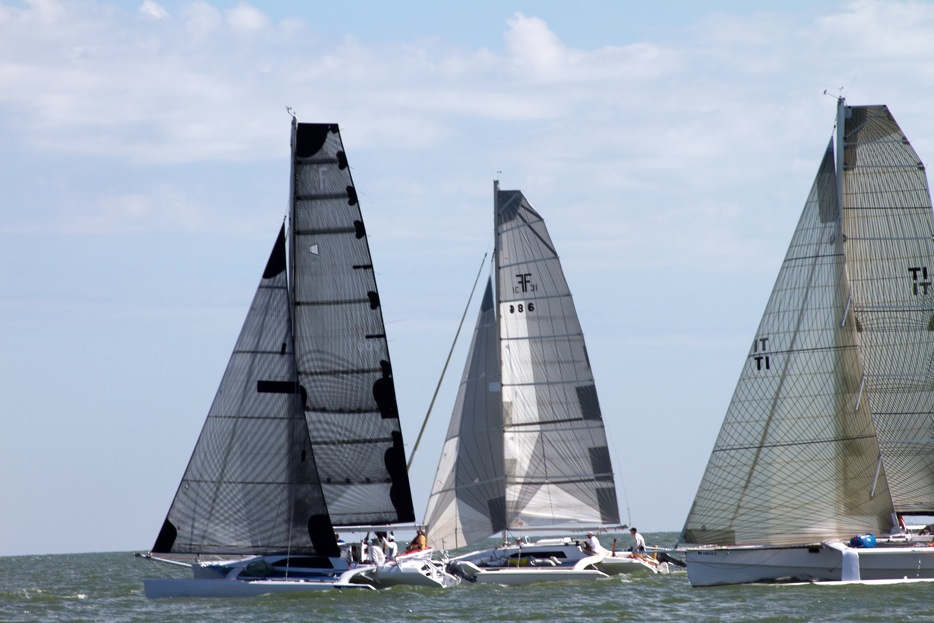
I have sailed the blade 1-up in those conditions. Maybe on purpose 1/2 of that time. It is amazing how easily you can depower it and go. I max downhaul, limit rotation, drop trav about 6-10 inches. prepare to swim on gybes though <img src=

alt=
/>
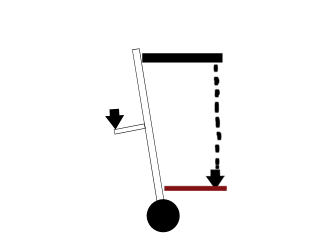
Hey Westcat, I'm contemplating this class also. I live a few hours down the coast, near Morro Bay. We windsurf quite a bit here, and the 5.0 sail is a good average size for a typical, moderately windy (20 kts) day.
The idea that someone can depower a sail *that* large is pretty impressive (not to mention use a spinnaker in 20+ kts!), but one wonders what happens when we view the problem from the other (dark?) side, that of the windsurfer who carries a set of 3-5 sails around and rigs the right one for a given day. If you're a light crew and sail most of the time offshore in California, how about just using smaller sails most of the time? It certainly seems legal under the class rules...or have I read them correctly?
The idea that someone can depower a sail *that* large is pretty impressive (not to mention use a spinnaker in 20+ kts!), but one wonders what happens when we view the problem from the other (dark?) side, that of the windsurfer who carries a set of 3-5 sails around and rigs the right one for a given day. If you're a light crew and sail most of the time offshore in California, how about just using smaller sails most of the time? It certainly seems legal under the class rules...or have I read them correctly?
Yes, well cut sails can be flattened well.
You can also have sails designed to be flatter and so less powerfull. There is another thread here from MarkP where he discusses how he has had his mainsail made a little flatter.
You can also have smaller sails of you wish, as long as the sail measures under the F16 rules, it does not have to be the maximum size!
I would however suggest trying a boat and just going wth full size, but maybe cut a little flatter.

I do quite a bit of landyachting each winter and have a series of 7 sails landyacht sails.
Just as with wind surfing these sails are typically considered small by the general public but can develop enough power to flow a car through the softer sand. Typical area's are 3 to 7 sq. mtr. but my largest sail is only 5.5 sq.mtr.
Interestingly enough my least powered up sail is 5.5 sq, mtr and my most powered up sail is 4.25 sq. mtr. This is all due to the draft cut into the sail and a little to the stiffness of the mast (tunig).
In my opinion the same applies to F16 sails. The area itself is not very important as long as you are sailing with the right cut and trim settings. Alot more difference can be had with adjusting these then by removing or adding area. Afterall, we have both heavy 2-up (150 kg) crews and light 1-up crews (70 kg) sail with the sail total mainsail area and do alright. This to some extent shows to control that the F16 rig offers to a crew. With cutting the sail for your conditions more can be had.
So I too advice to just keep the area and have it adjusted to your sailing conditions and typical crew weight.
Wouter

Just for conversation only, I am not working with a lot of experience here.
If the dude is looking for good times where he doesn't go out if it isn't blowing 15kts minimum, why not go for the
reefed
version of the sail. A Pinhead even perhaps. As ?PTP? suggested up thread the gybes can be hairy with all that tipping force at the end of the mast.
The beauty of the square top is the twisting off when the power isn't needed. He doesn't need it. Ever. When off the wind, that big ole flap turns broadside to the wind and gives a big push.
This is taking the multi-purpose F16 tool and converting it to a single-purpose (Higher Winds) weapon. If what he wants is light weight and spinnaker equipped, why not purpose build it. A flatter, smaller spin would be in the recipe too.
Just another keyboard sailor thinking aloud. Getting more snow today. <img src=

alt=
/>
alt=
/>
If you re-center the traveler and make a point to gybe through a smaller arc, I think you'll swim less. It seems to work for me.
alt=
/>
If you re-center the traveler and make a point to gybe through a smaller arc, I think you'll swim less. It seems to work for me.
we've talked about this alot... my impression is keeping it centered all the time during a gye really runs the risk of rounding you up hard though...
In the end... whatever works!!
alt=
/>
If you re-center the traveler and make a point to gybe through a smaller arc, I think you'll swim less. It seems to work for me.
we've talked about this alot... my impression is keeping it centered all the time during a gye really runs the risk of rounding you up hard though...
In the end... whatever works!!
. . .gybe through a smaller arc,
If you end the gybe dead down wind, with the main sheeted in and the travel centered, it's almost like being head to wind.
Agreed.... A must.
Week-end is over <img src=
alt=
/>. We had fantastic weather. Sunshine, blue sky and on-shore winds. Bit cold for the more sensitive fellows. But the wind was not that strong as predicted. Saturday was 4-5Bft with gusts in 6, but we took the T. When I took the Javelin on Sunday it was something like 12kts and some gusts reported to be 18kts with some old swell. That is a bit 'disappointing' if you expect something close to 20. For sure it is better to start sailing a new boat this way, but I was mentally adjusted to danger.
I had the impression that the boat could handle even more wind. Downwind the boat is a blast (well it felt like that, not much out there to compare those days) with and without the hooter. It indicates nose-diving early, and I actually never stuffed it that day. Due to the high mast and the short hulls, I expected some bad behaviour in waves, but it didn't (as long as you keep longitudinal trim). Only problem was, that all the sheets are to long, the trampoline looked then chaotic and I was trailing some of them most of time.
Hope you had great sailing as well.
Cheers,
Klaus

Can you define
very windy conditions
?
30 knots in Santa Cruz. Photo attached from before the wind got extreme.
For somebody whit the sea as profession, that doesn’t look 30 knots at least not on the photo. The sea surface looks different at 30 knots.
And a small thing but important, it’s no good to speak about being out in +25 knots on a forum where people whit very different skills are reading the posts. There is no difference what craft you are sailing, when the wind gets up to 30 knots things change and everything gets more difficult. So at least my point of vu is that there is no need to give the Coast Guard more job than they have by announcing to unskilled sailors that it’s safe to take a craft out in 30 knots.
You're right. At the time of the photos the conditions were at about 12 knots. That's why I wrote,
Photo attached from before the wind got extreme.
Later on in the day conditions got much more brisk with whitecaps and wind chop on top of the sea swell--all the typical things you'd expect for
sea state.
The windward mark for the races was a sea buoy out in the middle of Monterey Bay with a wind meter, and gusts of 30+ knots were recorded. It was not fun, but my point was that the boat can deal with it. The racing was curtailed and we came in.